

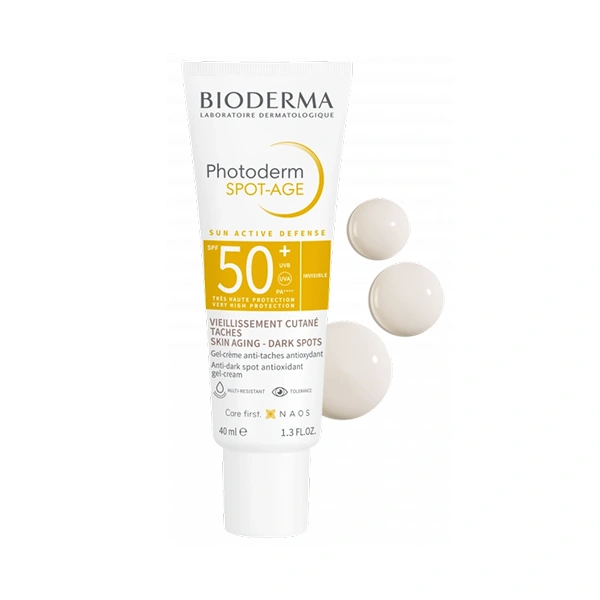
Bioderma Photoderm Spot Age SPF 50+ Sunscreen For Dark Spots 40ml
৳ 2,950.00 Original price was: ৳ 2,950.00.৳ 2,750.00Current price is: ৳ 2,750.00.
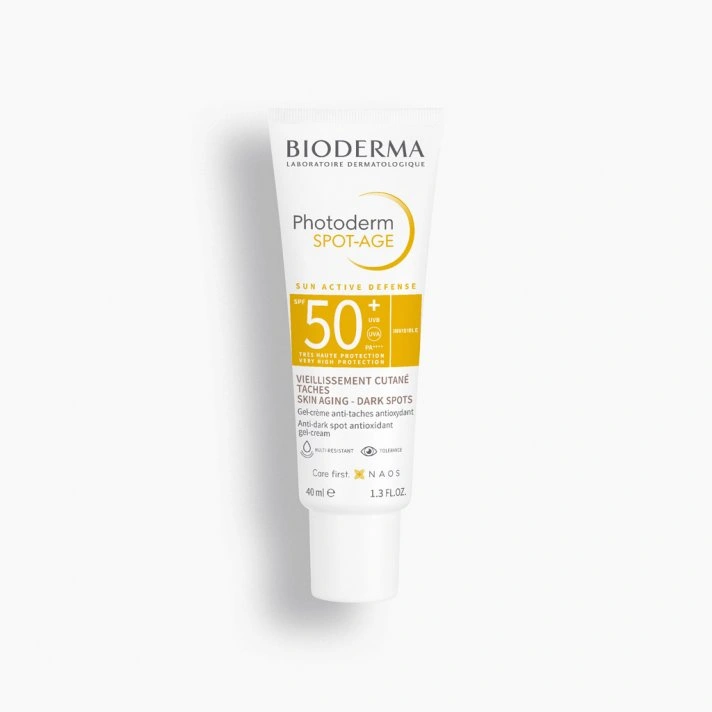
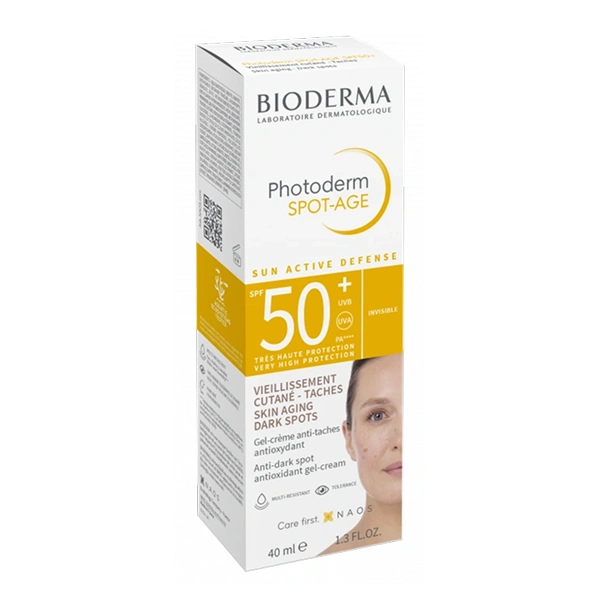
Bioderma Photoderm Spot Age SPF 50+ Sunscreen For Dark Spots 40ml is a French gel-cream sunscreen that protects skin and works on early signs of sun damage at the same time. It gives very high SPF 50+ and PA++++ protection against UVA, UVB, visible light, and infrared rays. Three actives, Ascorbyl Glucoside (a stable Vitamin C derivative), Vitamin E, and Centella asiatica compounds, brighten skin tone, fight free radicals, and aid repair. Brand tests recorded 13.4% less wrinkle depth and 20.3% more elasticity. The light, dry-touch texture suits all skin types, even oily skin in Dhaka heat. One honest note: the formula contains fragrance, so very reactive skin should patch test first.
Shipping & Delivery
Our courier will deliver to the specified address
Within 2 Days
From 80 Tk
Narayanganj, Savar, Ashulia, Keraniganj, Dohar
2-3 Days
From 130 Tk
Our courier will deliver to the specified address
2-3 Days
From 150 Tk
- Quick. Reliable. Hassle-free.
- Shop now and let us bring it to your doorstep!
Description
Bioderma Photoderm Spot Age SPF 50+ Sunscreen For Dark Spots 40ml Product Details
| Detail | Info |
| Brand | Bioderma (NAOS) |
| Product Name | Photoderm Spot Age SPF 50+ Sunscreen |
| Size | 40ml |
| Type | Anti-dark-spot sunscreen gel-cream |
| Skin Type | All skin types, including oily and combination skin |
| Concerns | Dark spots, photoaging, wrinkles, loss of firmness |
| Key Ingredients | Ascorbyl Glucoside, Tocopherol, Centella Asiatica Compounds, Ectoin |
| Texture | Light, fluid gel-cream |
| Finish | Non-greasy, non-sticky, dry-touch finish |
| Scent | Contains added fragrance (Parfum) |
| Usage | Every morning as the last step; reapply during long sun exposure |
| Origin | France |
| Note | SPF 50+, PA++++, water and humidity resistant, non-comedogenic |
Why Choose the Bioderma Photoderm Spot Age SPF 50+ Sunscreen?
Dhaka sun does slow damage that shows up years later. UV rays trigger dark spots, fine lines, and loss of firmness, and the city’s dust and pollution speed it all up. The Bioderma Photoderm Spot Age SPF 50+ Sunscreen answers both problems at once. It blocks the rays that cause new damage and softens the marks that earlier exposure left behind. One product, two jobs, every morning.
The brightening active is Ascorbyl Glucoside, a stable form of Vitamin C. Skin enzymes convert it into L-ascorbic acid, the pure active form. It evens skin tone and helps stop new dark spots from forming. The derivative stays stable inside a sunscreen, where pure Vitamin C would break down fast. Tocopherol, the natural alpha form of Vitamin E, adds the antioxidant layer. It blocks the free-radical chain reactions that UV light and pollution start in skin cells. This protects cell membranes and slows photoaging from oxidative stress.
Three Centella asiatica compounds, Asiaticoside, Madecassic Acid, and Asiatic Acid, take care of repair. They protect the dermis and aid skin regeneration. Bioderma’s tests put numbers on the result: wrinkle depth fell 13.4%, firmness rose 15%, and elasticity rose 20.3%. So this sunscreen doubles as a light anti-aging treatment.
Four UV filters build the shield itself. Tinosorb M and Tinosorb S cover both UVA and UVB. Avobenzone adds long-wave UVA cover, and Octocrylene handles UVB while it keeps the Avobenzone stable. The brand’s Sun Active Defense technology then adds a biological layer: Ectoin, a cell-protecting molecule, and Laminaria Ochroleuca, a golden algae extract, help skin defend itself against visible light, infrared rays, and pollution. The result is SPF 50+ with a PA++++ rating, the top UVA grade.
Comfort gets equal care. Glycerin and plant sugars (Xylitol, Rhamnose, and Fructooligosaccharides) hold water in the skin for 8 hours of hydration. Squalane softens without grease. Modified corn starch and Silica soak up surface oil, which creates the dry-touch finish. The film also resists water, sweat, heat, and high humidity.
The formula skips the usual trouble spots of older sunscreens. It has no drying alcohol and no mineral filters, so there is no heavy white cast. Bioderma tested it as non-comedogenic, so clogged pores are less likely. It also passed eye-area tolerance tests, useful since many sunscreens sting near the eyes. The 40ml tube fits a pocket or a small bag.
The Bioderma Photoderm Spot Age SPF 50+ Sunscreen fits all skin types and works best for skin that shows early sun damage. Know two things first. The formula contains added fragrance, which Bioderma’s own sensitive-skin lines avoid, so reactive skin should patch test. And spot correction takes patience: visible improvement arrives around the 28-day mark, not overnight.
Our Take: Pros and Cons of the Bioderma Photoderm Spot Age Sunscreen
| Pros | Cons |
| Four-filter shield spans UVA, UVB, visible light, and infrared | Added fragrance is a risk for reactive or allergy-prone skin |
| Stays on through monsoon humidity and heavy sweat | 40ml runs out in about a month at the correct daily dose |
| Test-backed anti-aging: 13.4% shallower wrinkles, 20.3% more elasticity | Marketing names L-ascorbic acid; the INCI lists milder Ascorbyl Glucoside |
Key Benefits of the Bioderma Photoderm Spot Age Sunscreen
Very High Broad-Spectrum Protection
SPF 50+ blocks about 98% of UVB rays at the full dose, and PA++++ marks the top UVA grade. Filters plus biological defense also cover visible light and infrared rays.
Helps Prevent New Dark Spots
Ascorbyl Glucoside evens skin tone and works against new spot formation. Vitamin E stops the oxidative stress that triggers excess pigment.
Measured Anti-Aging Results
Brand tests recorded 13.4% less wrinkle depth, 15% more firmness, and 20.3% more elasticity. Centella asiatica compounds drive the repair behind those numbers.
8-Hour Hydration
Glycerin and plant sugars hold water in the skin for 8 hours. Light skin types can even wear it alone, without a day cream.
Dry-Touch Comfort in Heat
Corn starch and Silica absorb surface oil for a non-greasy finish. The film resists water, heat, and high humidity, a real test in Dhaka.
Smooth Base for Makeup
The gel-cream sets to a dry, even layer. Foundation goes on over it without slipping or pilling.
Star Ingredients in the Bioderma Photoderm Spot Age Sunscreen
| Ingredient | What It Does |
| Ascorbyl Glucoside | Stable Vitamin C derivative that brightens and helps prevent new dark spots |
| Tocopherol (Vitamin E) | Antioxidant that protects cell membranes from UV and pollution damage |
| Centella Actives | Asiaticoside, Madecassic Acid, and Asiatic Acid that protect the dermis and aid repair |
| Ectoin | Stress-protection molecule that shields skin cells from UV and dehydration |
| Laminaria Ochroleuca Extract | Golden algae that helps defend skin against UVA and infrared damage |
| Tinosorb M and Tinosorb S | Modern broad-spectrum filters that absorb both UVA and UVB rays |
| Avobenzone | Classic chemical filter that covers long UVA rays |
| Octocrylene | UVB filter that also keeps Avobenzone stable |
| Corn Starch and Silica | Oil absorbers that create the smooth, dry-touch finish |
Ascorbyl Glucoside vs Other Vitamin C Forms
| Ingredient | Strength | Safety | Best For |
| Ascorbyl Glucoside | Mild | High | Daily brightening inside a stable sunscreen |
| L-Ascorbic Acid | Strong | Medium | Targeted dark spot treatment in nightly serums |
| Ethyl Ascorbic Acid | Medium | High | Faster-acting brightening effects in liquid serums |
| Sodium Ascorbyl Phosphate | Mild | High | Balancing oily, breakout-prone skin profiles |
| Ascorbyl Palmitate | Mild | High | Oil-based skincare formulas with weaker effects |
The Bioderma Photoderm Spot Age SPF 50+ Sunscreen uses Ascorbyl Glucoside because stability matters inside a sun product. Pure L-ascorbic acid oxidizes when it meets light, heat, and air, the exact conditions a sunscreen faces all day. The glucoside form holds steady, then skin enzymes release the active Vitamin C where skin needs it. The trade-off is speed: a dedicated serum brightens faster, while this works as quiet daily prevention.
Texture and Feel of the Bioderma Photoderm Spot Age Sunscreen
The Bioderma Photoderm Spot Age SPF 50+ Sunscreen is a light, fluid gel-cream, not a thick paste. It spreads with no drag and sinks in fast. The finish turns dry to the touch, with no sticky film left behind. Silica and modified corn starch soak up surface oil as it sets, so skin looks fresh, not shiny. Oily and combination skin gain the most from this specific finish.
Dhaka weather is the real test for any sunscreen. This one resists water, sweat, heat, and high humidity, so it holds through a sweaty commute or a monsoon afternoon. There is no need to blot or powder within the hour. Hydration runs underneath the dry surface. The formula holds moisture for 8 hours, so skin does not feel tight or chalky. Wear it every morning as the last skincare step, and makeup layers over it without trouble.
Who Should Use the Bioderma Photoderm Spot Age Sunscreen?
The Ideal Fit:
-
Adults with dark spots or uneven tone from sun exposure
-
Skin showing fine lines, shallow wrinkles, or early loss of firmness
-
Oily and combination skin types that want to avoid greasy sunscreens
-
Normal and dry skin that needs deep hydration with high protection
-
Daily commuters facing strong city sun, heat, and traffic pollution
-
Makeup wearers who need a dependable, dry-touch base layer
Not the Right Fit:
-
Fragrance-sensitive or highly reactive skin should choose a fragrance-free option instead
-
Anyone looking for an immediate overnight fix for old, deep dark spots
How to Use the Bioderma Photoderm Spot Age Sunscreen
Step 1: Cleanse and Prep
Wash your face and apply moisturizer if your skin runs dry. The hydrating formula means it can also go on alone after cleansing.
Step 2: Apply a Generous Layer
Coat the face and neck in a full, even layer. Bioderma warns that applying a small amount drops the protection below SPF 50+. Most adults need about a quarter teaspoon for the face alone.
Step 3: Let It Set Before Dressing
Give the cream a moment to absorb completely before clothes touch your face or neck. The brand advises against direct contact with fabrics to prevent staining.
Step 4: Reapply Through the Day
Put on a fresh layer after sweating, swimming, or towel drying. For long outdoor hours or field work, top up the protection every two hours.
Step 5: Make It a Daily Habit
Use it every morning, whether it is sunny or cloudy. UVA rays pass through heavy clouds and window glass year-round, even in the monsoon season.
Pro Tip for Using the Bioderma Photoderm Spot Age Sunscreen
Layer a stronger Vitamin C or niacinamide serum under it in the morning. The serum attacks the dark spots you already have while the sunscreen blocks the UV rays that create new ones, so the two cover both ends of the skin problem perfectly.
Store the 40ml tube away from direct heat. Sunscreen filters break down in a hot car or on a sunny windowsill, and weakened filters protect your skin less. Cap the tube tight after each use and order a backup before it runs low.
Complete Your Routine With the Bioderma Photoderm Spot Age Sunscreen
-
A gentle gel or foam cleanser for morning prep
-
A targeted Vitamin C serum for existing dark spots
-
A light, oil-free moisturizer for dry days
-
A micellar water or cleansing oil to remove the water-resistant film at night
-
A soothing aloe or Centella gel for after-sun care
-
A mild exfoliating toner to support faster tone correction
Full Ingredients List
Water, Dibutyl Adipate, Octocrylene, Methylene Bis-Benzotriazolyl Tetramethylbutylphenol (Nano), Propanediol, Butyl Methoxydibenzoylmethane, Glycerin, Dicaprylyl Carbonate, Bis-Ethylhexyloxyphenol Methoxyphenyl Triazine, Ascorbyl Glucoside, Corn Starch Modified, Dicaprylyl Ether, Silica, Tocopherol, Cetearyl Alcohol, Decyl Glucoside, C20-22 Alkyl Phosphate, C20-22 Alcohols, Hydroxyethyl Acrylate/Sodium Acryloyldimethyl Taurate Copolymer, Coco-Glucoside, Pentylene Glycol, Xanthan Gum, Squalane, Sodium Hydroxide, Sodium Citrate, 1,2-Hexanediol, Caprylyl Glycol, Glycine Soja (Soybean) Oil, Citric Acid, Ectoin, Mannitol, Xylitol, Polysorbate 60, Rhamnose, Propylene Glycol, Asiaticoside, Madecassic Acid, Asiatic Acid, Sorbitan Isostearate, Fructooligosaccharides, Caprylic/Capric Triglyceride, Laminaria Ochroleuca Extract, Fragrance (Parfum)
Glossary of Key Sunscreen Terms
| Term | Simple Meaning |
| SPF 50+ | Blocks about 98% of UVB rays when applied at the full dose |
| PA++++ | The highest UVA protection grade on the Asian rating scale |
| Broad-spectrum | Sun protection that covers both burning UVB and aging UVA rays |
| Photoaging | Dark spots, wrinkles, and sagging skin caused by sun exposure over time |
| Ascorbyl Glucoside | A stable Vitamin C derivative that skin enzymes convert to the active form |
| Tinosorb M & S | Modern organic UV filters that absorb and scatter UVA and UVB rays safely |
| Ectoin | A natural stress-protection molecule that shields skin cells from UV damage |
| Non-comedogenic | Formulated and tested to be highly unlikely to clog your pores |
Frequently Asked Questions About the Bioderma Photoderm Spot Age Sunscreen
What does the Bioderma Photoderm Spot Age SPF 50+ Sunscreen do?
The Bioderma Photoderm Spot Age SPF 50+ Sunscreen protects against UVA, UVB, visible light, and infrared rays. At the same time, its Vitamin C derivative, Vitamin E, and Centella compounds work on dark spots, wrinkles, and firmness. Brand tests measured 13.4% less wrinkle depth.
Does the Bioderma Photoderm Spot Age SPF 50+ Sunscreen fade existing dark spots?
The sunscreen brightens skin tone and evens it out with Ascorbyl Glucoside, and visible improvement shows around 28 days. Its stronger role is prevention, since it blocks the UV that creates new spots. For deep, old spots, add a dedicated brightening serum underneath.
What form of Vitamin C is in this sunscreen?
The ingredient list shows Ascorbyl Glucoside, a glucose-bound Vitamin C derivative. Skin enzymes convert it into L-ascorbic acid, the active form Bioderma references in its marketing. The derivative stays stable inside a sunscreen, where pure Vitamin C would oxidize.
Is the Bioderma Photoderm Spot Age SPF 50+ Sunscreen good for oily skin?
Yes. The gel-cream dries to a non-greasy finish, and corn starch plus silica absorb surface oil. Bioderma also tested it as non-comedogenic, so clogged pores are less likely.
Does it leave a white cast on deeper skin tones?
The formula contains no zinc oxide or titanium dioxide, the mineral filters behind the classic heavy white cast. One filter, Tinosorb M, is a fine particle, so a faint trace can show on deep skin tones. Blend well and let it set for a few minutes.
Is the Bioderma Photoderm Spot Age SPF 50+ Sunscreen water resistant?
Yes. Bioderma states the formula resists water, heat, and high humidity. Reapply after swimming, heavy sweat, or towel drying, since rubbing removes the protective layer.
Does it contain added fragrance?
Yes. The ingredient list ends with Fragrance (Parfum). Most skin types handle it fine, but reactive or allergy-prone skin should patch test on the jawline for a few days first.
Can you wear makeup over this sunscreen?
Yes. The dry, non-sticky finish makes a stable base layer. Give it a few minutes to set completely, then apply foundation or skin tint as usual.
How much of the sunscreen should I apply to face and neck?
Cover the face and neck with a full, even layer every morning. Bioderma warns that a small amount lowers the protection below SPF 50+. Most adults need about a quarter teaspoon for the face alone to reach the full stated defense.
Bioderma Photoderm Spot Age SPF 50+ Sunscreen For Dark Spots 40ml Product Details
| Detail | Info |
| Brand | Bioderma (NAOS) |
| Product Name | Photoderm Spot Age SPF 50+ Sunscreen |
| Size | 40ml |
| Type | Anti-dark-spot sunscreen gel-cream |
| Skin Type | All skin types, including oily and combination skin |
| Concerns | Dark spots, photoaging, wrinkles, loss of firmness |
| Key Ingredients | Ascorbyl Glucoside, Tocopherol, Centella Asiatica Compounds, Ectoin |
| Texture | Light, fluid gel-cream |
| Finish | Non-greasy, non-sticky, dry-touch finish |
| Scent | Contains added fragrance (Parfum) |
| Usage | Every morning as the last step; reapply during long sun exposure |
| Origin | France |
| Note | SPF 50+, PA++++, water and humidity resistant, non-comedogenic |
Why Choose the Bioderma Photoderm Spot Age SPF 50+ Sunscreen?
Dhaka sun does slow damage that shows up years later. UV rays trigger dark spots, fine lines, and loss of firmness, and the city’s dust and pollution speed it all up. The Bioderma Photoderm Spot Age SPF 50+ Sunscreen answers both problems at once. It blocks the rays that cause new damage and softens the marks that earlier exposure left behind. One product, two jobs, every morning.
The brightening active is Ascorbyl Glucoside, a stable form of Vitamin C. Skin enzymes convert it into L-ascorbic acid, the pure active form. It evens skin tone and helps stop new dark spots from forming. The derivative stays stable inside a sunscreen, where pure Vitamin C would break down fast. Tocopherol, the natural alpha form of Vitamin E, adds the antioxidant layer. It blocks the free-radical chain reactions that UV light and pollution start in skin cells. This protects cell membranes and slows photoaging from oxidative stress.
Three Centella asiatica compounds, Asiaticoside, Madecassic Acid, and Asiatic Acid, take care of repair. They protect the dermis and aid skin regeneration. Bioderma’s tests put numbers on the result: wrinkle depth fell 13.4%, firmness rose 15%, and elasticity rose 20.3%. So this sunscreen doubles as a light anti-aging treatment.
Four UV filters build the shield itself. Tinosorb M and Tinosorb S cover both UVA and UVB. Avobenzone adds long-wave UVA cover, and Octocrylene handles UVB while it keeps the Avobenzone stable. The brand’s Sun Active Defense technology then adds a biological layer: Ectoin, a cell-protecting molecule, and Laminaria Ochroleuca, a golden algae extract, help skin defend itself against visible light, infrared rays, and pollution. The result is SPF 50+ with a PA++++ rating, the top UVA grade.
Comfort gets equal care. Glycerin and plant sugars (Xylitol, Rhamnose, and Fructooligosaccharides) hold water in the skin for 8 hours of hydration. Squalane softens without grease. Modified corn starch and Silica soak up surface oil, which creates the dry-touch finish. The film also resists water, sweat, heat, and high humidity.
The formula skips the usual trouble spots of older sunscreens. It has no drying alcohol and no mineral filters, so there is no heavy white cast. Bioderma tested it as non-comedogenic, so clogged pores are less likely. It also passed eye-area tolerance tests, useful since many sunscreens sting near the eyes. The 40ml tube fits a pocket or a small bag.
The Bioderma Photoderm Spot Age SPF 50+ Sunscreen fits all skin types and works best for skin that shows early sun damage. Know two things first. The formula contains added fragrance, which Bioderma’s own sensitive-skin lines avoid, so reactive skin should patch test. And spot correction takes patience: visible improvement arrives around the 28-day mark, not overnight.
Our Take: Pros and Cons of the Bioderma Photoderm Spot Age Sunscreen
| Pros | Cons |
| Four-filter shield spans UVA, UVB, visible light, and infrared | Added fragrance is a risk for reactive or allergy-prone skin |
| Stays on through monsoon humidity and heavy sweat | 40ml runs out in about a month at the correct daily dose |
| Test-backed anti-aging: 13.4% shallower wrinkles, 20.3% more elasticity | Marketing names L-ascorbic acid; the INCI lists milder Ascorbyl Glucoside |
Key Benefits of the Bioderma Photoderm Spot Age Sunscreen
Very High Broad-Spectrum Protection
SPF 50+ blocks about 98% of UVB rays at the full dose, and PA++++ marks the top UVA grade. Filters plus biological defense also cover visible light and infrared rays.
Helps Prevent New Dark Spots
Ascorbyl Glucoside evens skin tone and works against new spot formation. Vitamin E stops the oxidative stress that triggers excess pigment.
Measured Anti-Aging Results
Brand tests recorded 13.4% less wrinkle depth, 15% more firmness, and 20.3% more elasticity. Centella asiatica compounds drive the repair behind those numbers.
8-Hour Hydration
Glycerin and plant sugars hold water in the skin for 8 hours. Light skin types can even wear it alone, without a day cream.
Dry-Touch Comfort in Heat
Corn starch and Silica absorb surface oil for a non-greasy finish. The film resists water, heat, and high humidity, a real test in Dhaka.
Smooth Base for Makeup
The gel-cream sets to a dry, even layer. Foundation goes on over it without slipping or pilling.
Star Ingredients in the Bioderma Photoderm Spot Age Sunscreen
| Ingredient | What It Does |
| Ascorbyl Glucoside | Stable Vitamin C derivative that brightens and helps prevent new dark spots |
| Tocopherol (Vitamin E) | Antioxidant that protects cell membranes from UV and pollution damage |
| Centella Actives | Asiaticoside, Madecassic Acid, and Asiatic Acid that protect the dermis and aid repair |
| Ectoin | Stress-protection molecule that shields skin cells from UV and dehydration |
| Laminaria Ochroleuca Extract | Golden algae that helps defend skin against UVA and infrared damage |
| Tinosorb M and Tinosorb S | Modern broad-spectrum filters that absorb both UVA and UVB rays |
| Avobenzone | Classic chemical filter that covers long UVA rays |
| Octocrylene | UVB filter that also keeps Avobenzone stable |
| Corn Starch and Silica | Oil absorbers that create the smooth, dry-touch finish |
Ascorbyl Glucoside vs Other Vitamin C Forms
| Ingredient | Strength | Safety | Best For |
| Ascorbyl Glucoside | Mild | High | Daily brightening inside a stable sunscreen |
| L-Ascorbic Acid | Strong | Medium | Targeted dark spot treatment in nightly serums |
| Ethyl Ascorbic Acid | Medium | High | Faster-acting brightening effects in liquid serums |
| Sodium Ascorbyl Phosphate | Mild | High | Balancing oily, breakout-prone skin profiles |
| Ascorbyl Palmitate | Mild | High | Oil-based skincare formulas with weaker effects |
The Bioderma Photoderm Spot Age SPF 50+ Sunscreen uses Ascorbyl Glucoside because stability matters inside a sun product. Pure L-ascorbic acid oxidizes when it meets light, heat, and air, the exact conditions a sunscreen faces all day. The glucoside form holds steady, then skin enzymes release the active Vitamin C where skin needs it. The trade-off is speed: a dedicated serum brightens faster, while this works as quiet daily prevention.
Texture and Feel of the Bioderma Photoderm Spot Age Sunscreen
The Bioderma Photoderm Spot Age SPF 50+ Sunscreen is a light, fluid gel-cream, not a thick paste. It spreads with no drag and sinks in fast. The finish turns dry to the touch, with no sticky film left behind. Silica and modified corn starch soak up surface oil as it sets, so skin looks fresh, not shiny. Oily and combination skin gain the most from this specific finish.
Dhaka weather is the real test for any sunscreen. This one resists water, sweat, heat, and high humidity, so it holds through a sweaty commute or a monsoon afternoon. There is no need to blot or powder within the hour. Hydration runs underneath the dry surface. The formula holds moisture for 8 hours, so skin does not feel tight or chalky. Wear it every morning as the last skincare step, and makeup layers over it without trouble.
Who Should Use the Bioderma Photoderm Spot Age Sunscreen?
The Ideal Fit:
-
Adults with dark spots or uneven tone from sun exposure
-
Skin showing fine lines, shallow wrinkles, or early loss of firmness
-
Oily and combination skin types that want to avoid greasy sunscreens
-
Normal and dry skin that needs deep hydration with high protection
-
Daily commuters facing strong city sun, heat, and traffic pollution
-
Makeup wearers who need a dependable, dry-touch base layer
Not the Right Fit:
-
Fragrance-sensitive or highly reactive skin should choose a fragrance-free option instead
-
Anyone looking for an immediate overnight fix for old, deep dark spots
How to Use the Bioderma Photoderm Spot Age Sunscreen
Step 1: Cleanse and Prep
Wash your face and apply moisturizer if your skin runs dry. The hydrating formula means it can also go on alone after cleansing.
Step 2: Apply a Generous Layer
Coat the face and neck in a full, even layer. Bioderma warns that applying a small amount drops the protection below SPF 50+. Most adults need about a quarter teaspoon for the face alone.
Step 3: Let It Set Before Dressing
Give the cream a moment to absorb completely before clothes touch your face or neck. The brand advises against direct contact with fabrics to prevent staining.
Step 4: Reapply Through the Day
Put on a fresh layer after sweating, swimming, or towel drying. For long outdoor hours or field work, top up the protection every two hours.
Step 5: Make It a Daily Habit
Use it every morning, whether it is sunny or cloudy. UVA rays pass through heavy clouds and window glass year-round, even in the monsoon season.
Pro Tip for Using the Bioderma Photoderm Spot Age Sunscreen
Layer a stronger Vitamin C or niacinamide serum under it in the morning. The serum attacks the dark spots you already have while the sunscreen blocks the UV rays that create new ones, so the two cover both ends of the skin problem perfectly.
Store the 40ml tube away from direct heat. Sunscreen filters break down in a hot car or on a sunny windowsill, and weakened filters protect your skin less. Cap the tube tight after each use and order a backup before it runs low.
Complete Your Routine With the Bioderma Photoderm Spot Age Sunscreen
-
A gentle gel or foam cleanser for morning prep
-
A targeted Vitamin C serum for existing dark spots
-
A light, oil-free moisturizer for dry days
-
A micellar water or cleansing oil to remove the water-resistant film at night
-
A soothing aloe or Centella gel for after-sun care
-
A mild exfoliating toner to support faster tone correction
Full Ingredients List
Water, Dibutyl Adipate, Octocrylene, Methylene Bis-Benzotriazolyl Tetramethylbutylphenol (Nano), Propanediol, Butyl Methoxydibenzoylmethane, Glycerin, Dicaprylyl Carbonate, Bis-Ethylhexyloxyphenol Methoxyphenyl Triazine, Ascorbyl Glucoside, Corn Starch Modified, Dicaprylyl Ether, Silica, Tocopherol, Cetearyl Alcohol, Decyl Glucoside, C20-22 Alkyl Phosphate, C20-22 Alcohols, Hydroxyethyl Acrylate/Sodium Acryloyldimethyl Taurate Copolymer, Coco-Glucoside, Pentylene Glycol, Xanthan Gum, Squalane, Sodium Hydroxide, Sodium Citrate, 1,2-Hexanediol, Caprylyl Glycol, Glycine Soja (Soybean) Oil, Citric Acid, Ectoin, Mannitol, Xylitol, Polysorbate 60, Rhamnose, Propylene Glycol, Asiaticoside, Madecassic Acid, Asiatic Acid, Sorbitan Isostearate, Fructooligosaccharides, Caprylic/Capric Triglyceride, Laminaria Ochroleuca Extract, Fragrance (Parfum)
Glossary of Key Sunscreen Terms
| Term | Simple Meaning |
| SPF 50+ | Blocks about 98% of UVB rays when applied at the full dose |
| PA++++ | The highest UVA protection grade on the Asian rating scale |
| Broad-spectrum | Sun protection that covers both burning UVB and aging UVA rays |
| Photoaging | Dark spots, wrinkles, and sagging skin caused by sun exposure over time |
| Ascorbyl Glucoside | A stable Vitamin C derivative that skin enzymes convert to the active form |
| Tinosorb M & S | Modern organic UV filters that absorb and scatter UVA and UVB rays safely |
| Ectoin | A natural stress-protection molecule that shields skin cells from UV damage |
| Non-comedogenic | Formulated and tested to be highly unlikely to clog your pores |
Frequently Asked Questions About the Bioderma Photoderm Spot Age Sunscreen
What does the Bioderma Photoderm Spot Age SPF 50+ Sunscreen do?
The Bioderma Photoderm Spot Age SPF 50+ Sunscreen protects against UVA, UVB, visible light, and infrared rays. At the same time, its Vitamin C derivative, Vitamin E, and Centella compounds work on dark spots, wrinkles, and firmness. Brand tests measured 13.4% less wrinkle depth.
Does the Bioderma Photoderm Spot Age SPF 50+ Sunscreen fade existing dark spots?
The sunscreen brightens skin tone and evens it out with Ascorbyl Glucoside, and visible improvement shows around 28 days. Its stronger role is prevention, since it blocks the UV that creates new spots. For deep, old spots, add a dedicated brightening serum underneath.
What form of Vitamin C is in this sunscreen?
The ingredient list shows Ascorbyl Glucoside, a glucose-bound Vitamin C derivative. Skin enzymes convert it into L-ascorbic acid, the active form Bioderma references in its marketing. The derivative stays stable inside a sunscreen, where pure Vitamin C would oxidize.
Is the Bioderma Photoderm Spot Age SPF 50+ Sunscreen good for oily skin?
Yes. The gel-cream dries to a non-greasy finish, and corn starch plus silica absorb surface oil. Bioderma also tested it as non-comedogenic, so clogged pores are less likely.
Does it leave a white cast on deeper skin tones?
The formula contains no zinc oxide or titanium dioxide, the mineral filters behind the classic heavy white cast. One filter, Tinosorb M, is a fine particle, so a faint trace can show on deep skin tones. Blend well and let it set for a few minutes.
Is the Bioderma Photoderm Spot Age SPF 50+ Sunscreen water resistant?
Yes. Bioderma states the formula resists water, heat, and high humidity. Reapply after swimming, heavy sweat, or towel drying, since rubbing removes the protective layer.
Does it contain added fragrance?
Yes. The ingredient list ends with Fragrance (Parfum). Most skin types handle it fine, but reactive or allergy-prone skin should patch test on the jawline for a few days first.
Can you wear makeup over this sunscreen?
Yes. The dry, non-sticky finish makes a stable base layer. Give it a few minutes to set completely, then apply foundation or skin tint as usual.
How much of the sunscreen should I apply to face and neck?
Cover the face and neck with a full, even layer every morning. Bioderma warns that a small amount lowers the protection below SPF 50+. Most adults need about a quarter teaspoon for the face alone to reach the full stated defense.
Customer Reviews
You may also like

Avene Ultra Broad Spectre Fluid Fragrance Free SPF50+
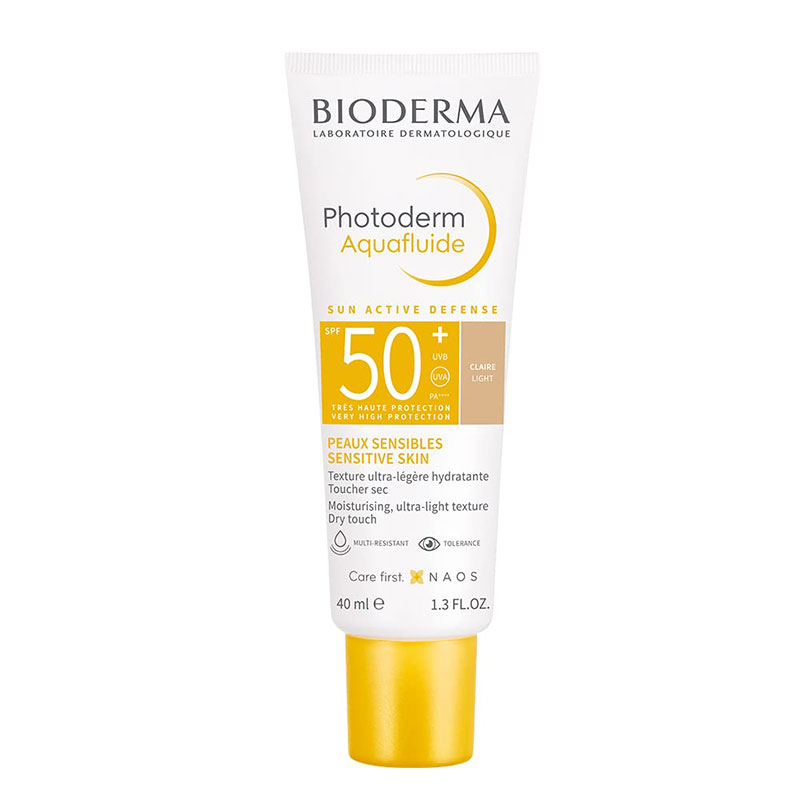
Bioderma Photoderm Aquafluide SPF 50+ Claire Light – 40ml
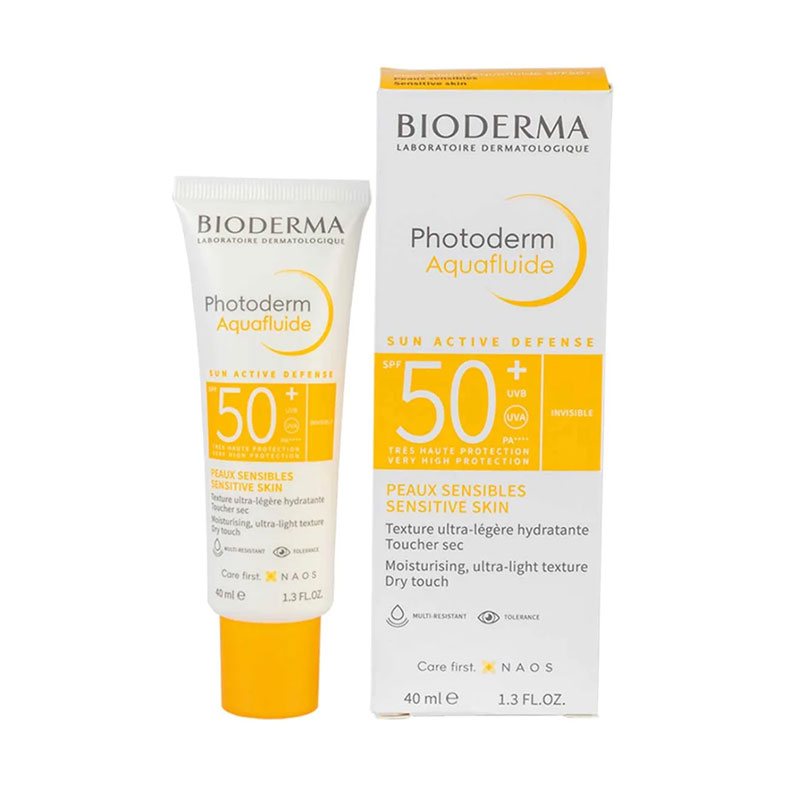
Bioderma Photoderm Aquafluide SPF50+ Invisible 40ml
-
Lightweight, invisible texture with matte finish
-
Very high sun protection (SPF50+) for sensitive skin
-
Oil-control formula ideal for humid climates
-
Strengthens skin’s natural UV defense system
Suitable for Skin Type:
✔ Sensitive Skin
✔ Oily & Combination Skin
✔ Acne-Prone Skin
✘ Not recommended for extremely dry skin without additional hydration
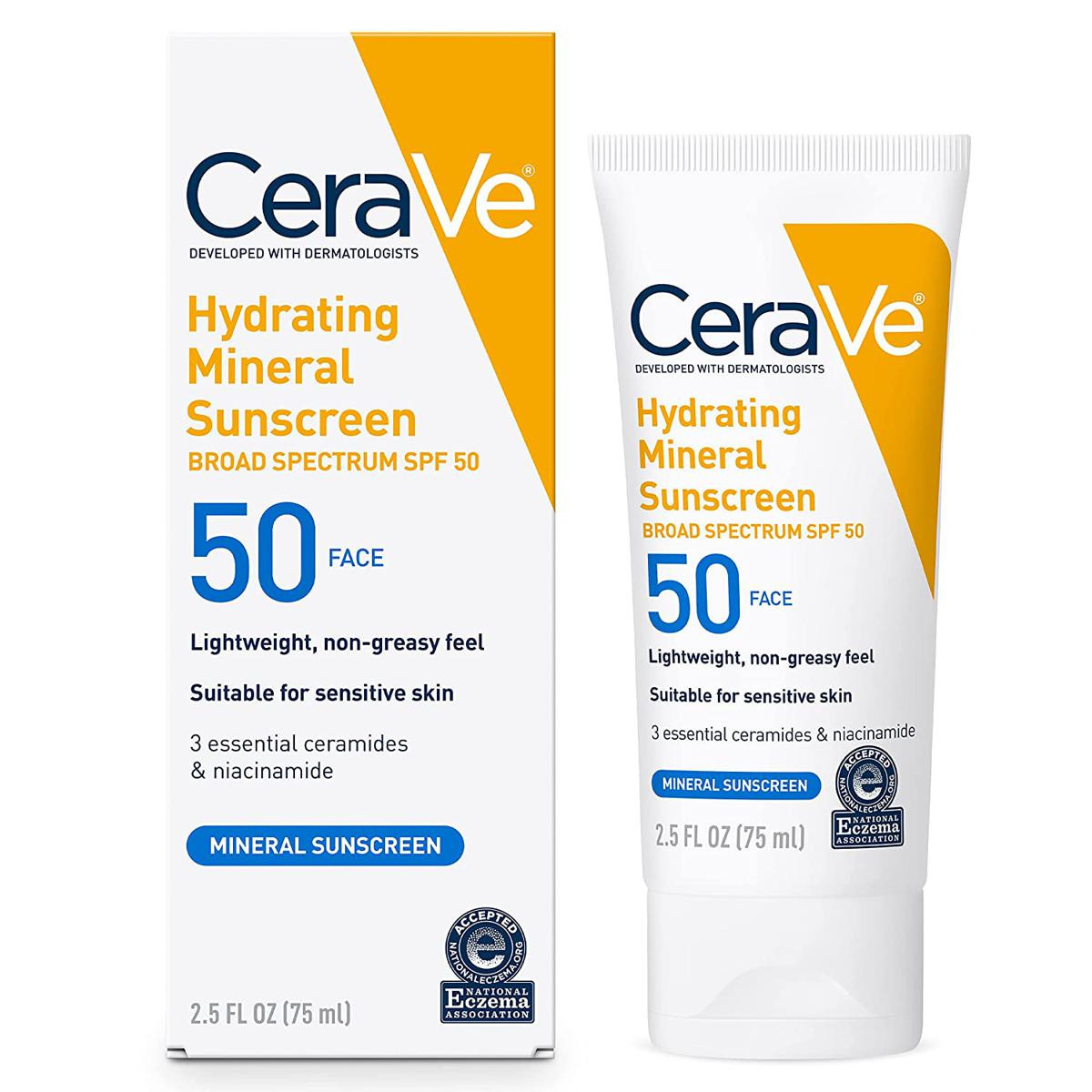
CeraVe Hydrating Mineral Face Sunscreen Broad Spectrum SPF 50
Benefits:
-
Broad-Spectrum Protection: Provides SPF 50 defense against both UVA and UVB rays using physical (mineral) blockers.
-
Gentle for Sensitive Skin: Free from fragrance, parabens, and chemical filters — perfect for those with reactive or acne-prone skin.
-
Hydrates and Repairs: Enriched with hyaluronic acid and ceramides to maintain moisture and restore the skin barrier.
-
Non-Greasy, Lightweight Formula: Absorbs quickly without leaving a greasy film or white cast, making it ideal for daily wear under makeup.

Reviews
Clear filtersThere are no reviews yet.